Troubleshooting
How Much Water Should Be in a Water Softener Salt Tank?
Judge salt-tank water by the system model, fill sequence, and cycle stage. Use an observation sheet to separate normal changes from conditions needing support.
Maintenance
Use a printable water softener maintenance log to track salt, hardness readings, and service. Learn which checks are routine and which depend on your model.
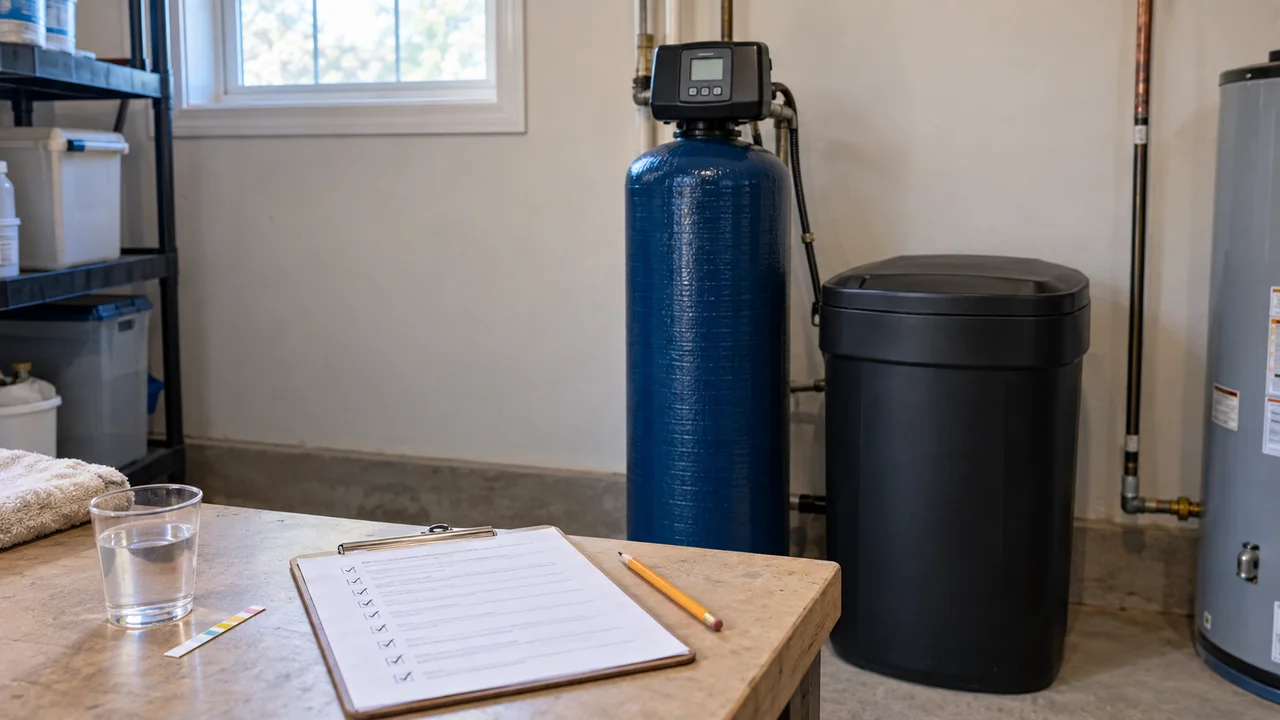
To maintain a salt-based water softener, keep a record of its salt supply, controller display, regeneration activity, visible condition, and treated-water hardness. Use your model's manual to decide when to refill or clean it. A useful maintenance checklist separates observations you can make routinely from service procedures that require specific instructions.
This checklist is for residential salt-regenerating softeners. It does not describe maintenance for a salt-free conditioner, a drinking-water filter, or every component of a well-water treatment system.
Find the label on the complete softener and save its matching owner manual. If the control valve has a separate model number, record that too; instructions for a valve alone may not describe the entire installed system.
Before changing a setting, make a short equipment record:
Photographs of the label and display can save a difficult transcription later. Mark uncertain information as unknown, especially if you inherited the equipment. A previous owner's note is useful context, but it is not a reason to change a setting without checking its basis.
Use this table to organize reminders around your manual and your household's observations. The timing column is a planning aid, not a universal service schedule.
| Check | When to put it on your list | What to record or do next |
|---|---|---|
| Salt inventory | While learning your refill pattern, then at an interval that avoids running out | Note the visible level, product, and amount added; follow the model's fill guidance |
| Controller and messages | With your routine visual check and after an interruption or reported problem | Record the display before adjusting anything |
| Regeneration activity | When the controller provides a history, or when you observe a cycle | Note the date and whether it was automatic or manually requested |
| Tank water observation | When inspecting the salt compartment | Record whether a cycle is underway; compare like-for-like observations |
| Exterior and nearby floor | During a visual check and whenever you notice wetness | Photograph a new leak or unusual condition and arrange the appropriate help |
| Treated-water hardness | When establishing a baseline, after relevant service, or when performance changes | Use the same documented sampling method and record the actual reading and unit |
| Cleaning and service | At the interval specified for your equipment and water conditions | Write down the exact procedure, approved product if required, and who will do it |
The EcoWater ESD2750/2752 owner manual, for example, specifies salt checks every 2 or 3 weeks while establishing a refill routine. Treat that as an example for the listed models. Choose your reminder using your own manual and observations.
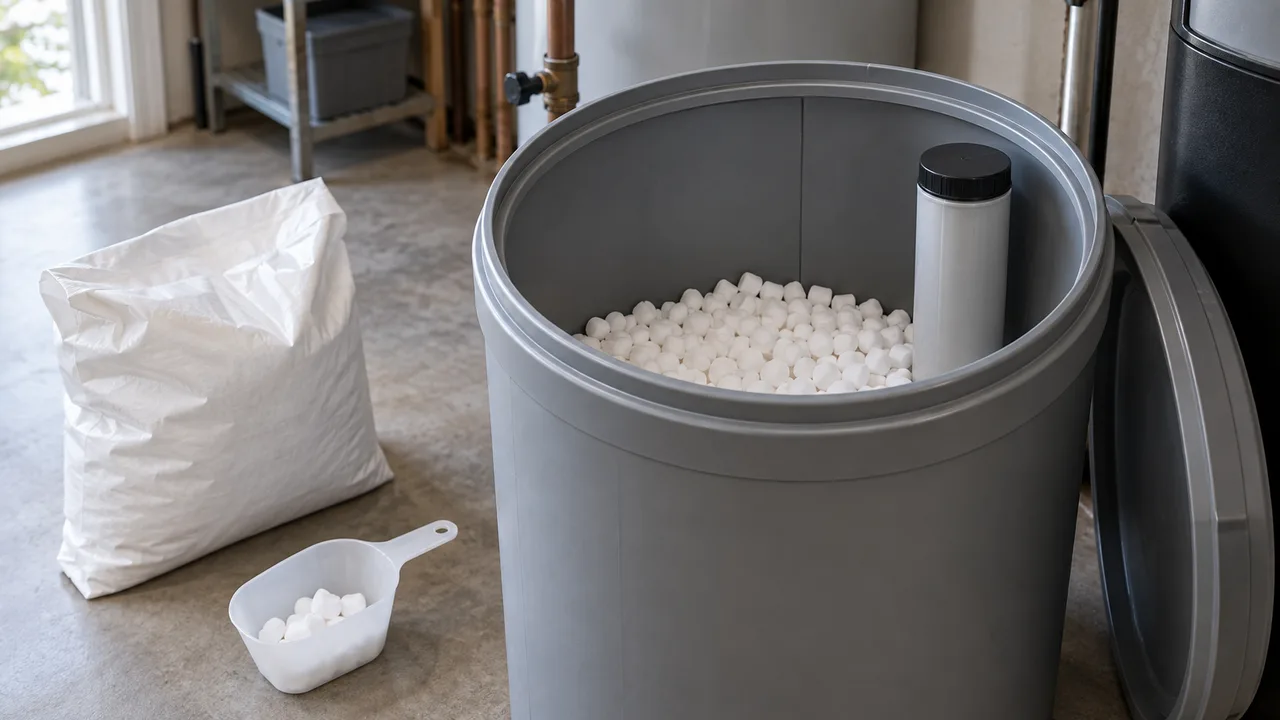
A refill entry should say more than “added salt.” Include the product, bag weight or amount actually poured in, and the level before and afterward. Purchased salt and salt added to the tank are different entries if some of the bag remains in storage.
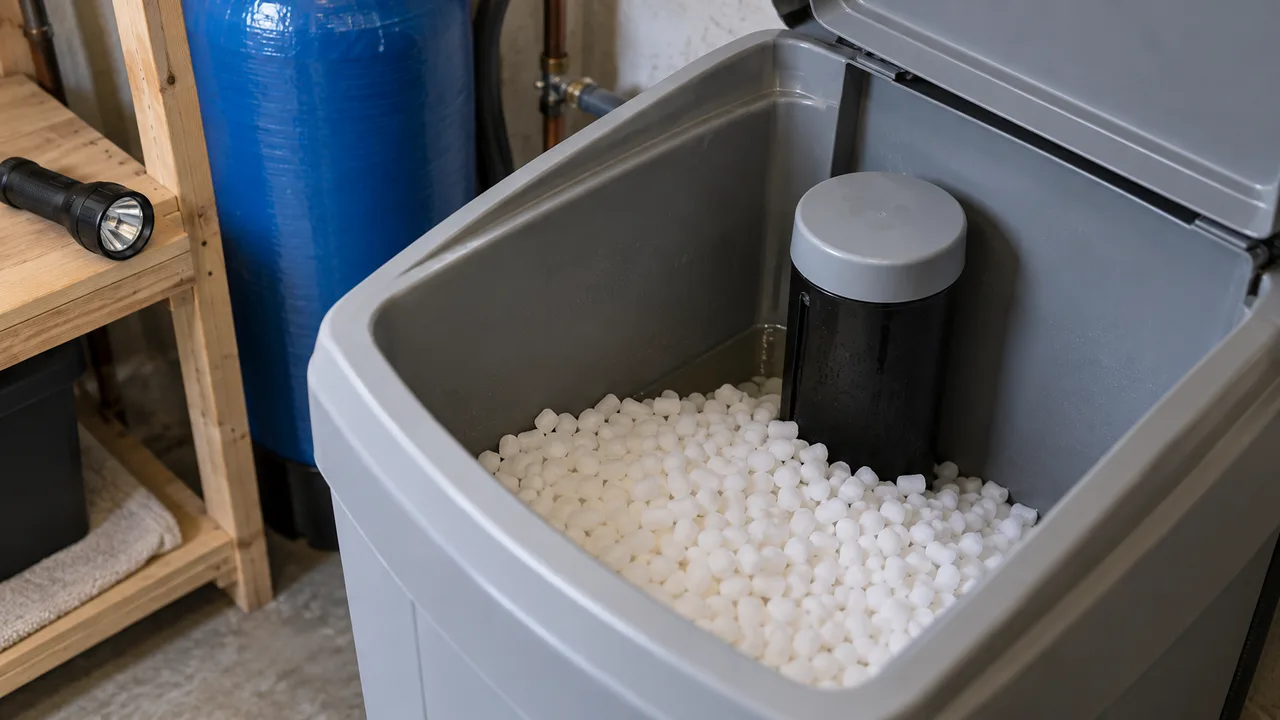
If salt appears unchanged across repeated observations, preserve that information before topping up again. A full-looking tank is not proof of normal operation. Compare your record with the model's troubleshooting instructions; this checklist does not require inserting tools into the tank.
Record visible water separately from salt. Rheem's explanation of salt-tank water levels describes how the level changes during its recharge cycle. An observation during filling cannot be compared directly with one after the cycle has finished. Avoid adding or draining water simply to match a picture of another softener.
A maintenance record needs an outcome as well as a list of actions. Write down a treated-water hardness result using the test's instructions, including the sampling location, timing, and unit. When comparing results, keep those conditions consistent and distinguish incoming-water measurements from treated-water measurements.
Rheem's performance-check guide recommends checking operation instead of relying on how water feels. Its process considers settings, bypass, water metering, salt, and a hardness test. Use your own model's procedure for any control or valve operation; button sequences and handle directions are not interchangeable.
If a repeat result differs from your established baseline, record what happened before the change. Useful context includes a recent refill, service visit, changed setting, or unusual cycle. Give that record to the manufacturer or service provider rather than repeatedly adjusting several settings at once.
“Clean the softener” is too vague to be a maintenance task. Specify the part, method, product if applicable, and reason for doing it.
For example, Rheem's general maintenance guidance recommends its softener cleanser every four months and cleaning the venturi and drain hose annually. These are Rheem instructions to check against the relevant equipment, not a generic recipe for every brand.
Keep salt-tank cleaning, resin cleaning, and internal valve service as separate entries. Do not substitute a household chemical for a specified product or infer a dosage from another model. If a procedure requires depressurization, disassembly, or steps you cannot identify confidently in the manual, arrange service before opening the assembly.
Use the page's Print this page button and keep the record with your manual. Start with observations; fill in the action only after deciding what the evidence supports.
| Record field | Your entry |
|---|---|
| Date and time | ______________________________ |
| System model / manual | ______________________________ |
| Salt level before / after | ______________________________ |
| Salt product and amount added | ______________________________ |
| Tank water observation / cycle stage | ______________________________ |
| Test location / hardness reading / unit | ______________________________ |
| Controller message / setting change | ______________________________ |
| Last observed cycle / automatic or manual | ______________________________ |
| Visible condition / symptom | ______________________________ |
| Action taken / person or company | ______________________________ |
| Recheck result / next reminder | ______________________________ |
Keep receipts alongside the log if you also want a maintenance budget. Enter recorded salt spending and maintenance charges in the water softener running-cost calculator to build an operating-cost scenario. Label the period you recorded and keep equipment purchase and installation costs separate. The calculator helps organize expenses; it does not diagnose whether a maintenance action is needed.
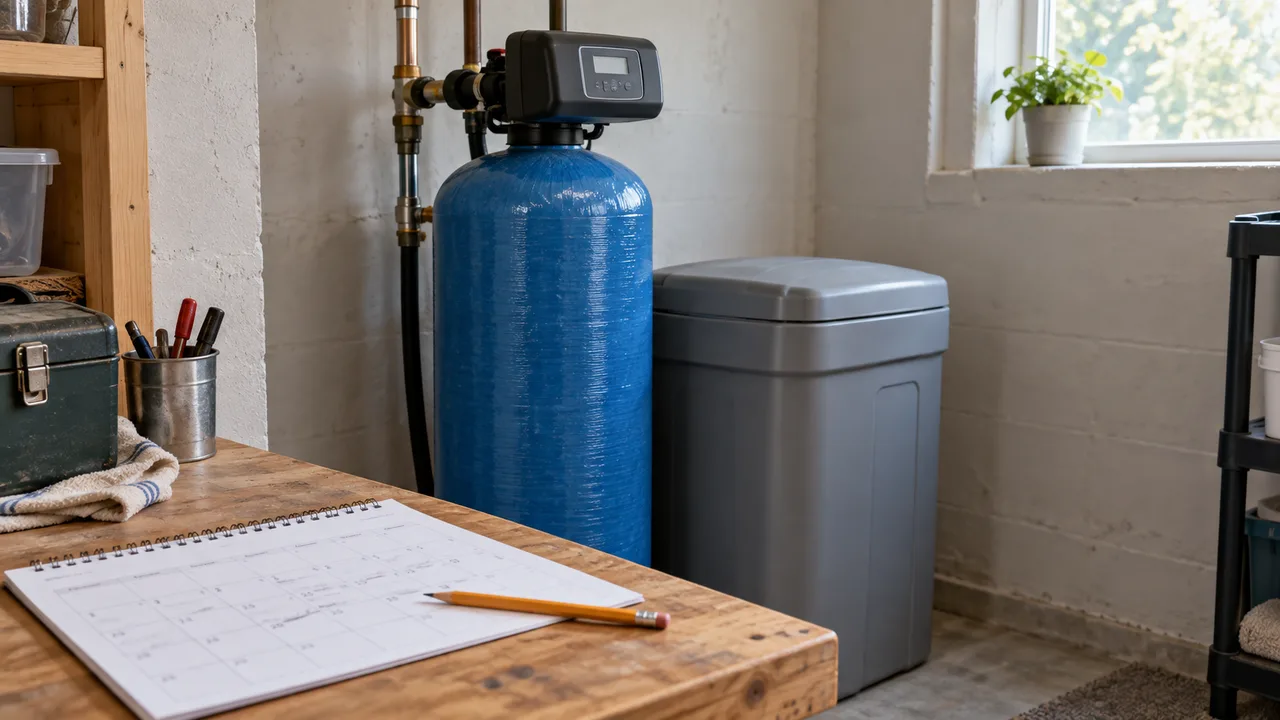
The useful question is whether your existing reminder still catches a change in time. If your records show you are approaching the manual's refill point before the next planned check, bring that check forward. If an unfamiliar message or repeated performance change appears, a calendar reminder alone will not explain it.
For a service request, assemble the model, dated observations, photographs, test results, and changes already made. Ask which observation would distinguish the possible causes and what result should follow the proposed work. That gives the next visit a question to answer, rather than an open-ended request to replace parts.
Start with the interval in your model's manual and adjust your reminder before the tank can run out. EcoWater's cited ESD2750/2752 manual gives its owners a two- or three-week observation interval while establishing a refill routine. Record the level each time. A changing pattern is more useful than assuming one calendar interval works for every household.
No. The part being cleaned, equipment instructions, and water conditions determine the task. Rheem's cited maintenance guidance gives its own cleanser and component-cleaning intervals, but those do not establish a schedule for another brand. In your log, name the actual procedure and its source. If the instructions require work you cannot safely identify or perform, arrange appropriate service.
Yes. A full-looking tank does not establish that salt is dissolving as intended. A bridge can leave a gap underneath the visible salt, so compare observations over time and check the appropriate troubleshooting instructions. Record the tank condition and any change in treated-water performance before adding more salt or attempting a repair based on another model's directions.
Compare a recorded treated-water hardness result with your previous baseline using the same documented sampling conditions. Note the action taken, its timing, and the test's unit rather than relying only on how the water feels. If the repeat result remains unexpected, preserve those details for the manufacturer or service provider instead of changing several settings together.
Identify the complete system and locate its matching manual before adopting a maintenance schedule. Record the current display, salt product, visible condition, and any known service history. Mark missing details as unknown. Establish a dated observation and hardness-test record, then use the manual to decide which checks or service tasks actually apply to that equipment.
Troubleshooting
Judge salt-tank water by the system model, fill sequence, and cycle stage. Use an observation sheet to separate normal changes from conditions needing support.
Salt & regeneration
Choose a model-appropriate refill level, record the salt actually added, and estimate your replenishment needs without a universal bags-per-month rule.
Salt & regeneration
Estimate a capacity-based regeneration interval, compare it with real cycle records, and identify the inputs behind a changing schedule.