Maintenance
Water Softener After a Power Outage: What Settings Should You Check?
Check your softener clock, retained programming and interrupted-cycle status after an outage, with model-specific examples and a printable recovery record.
Maintenance
Clean the salt tank and brinewell using model-specific instructions. Includes a printable cleaning record, refill checks, and clear limits on sanitizing.
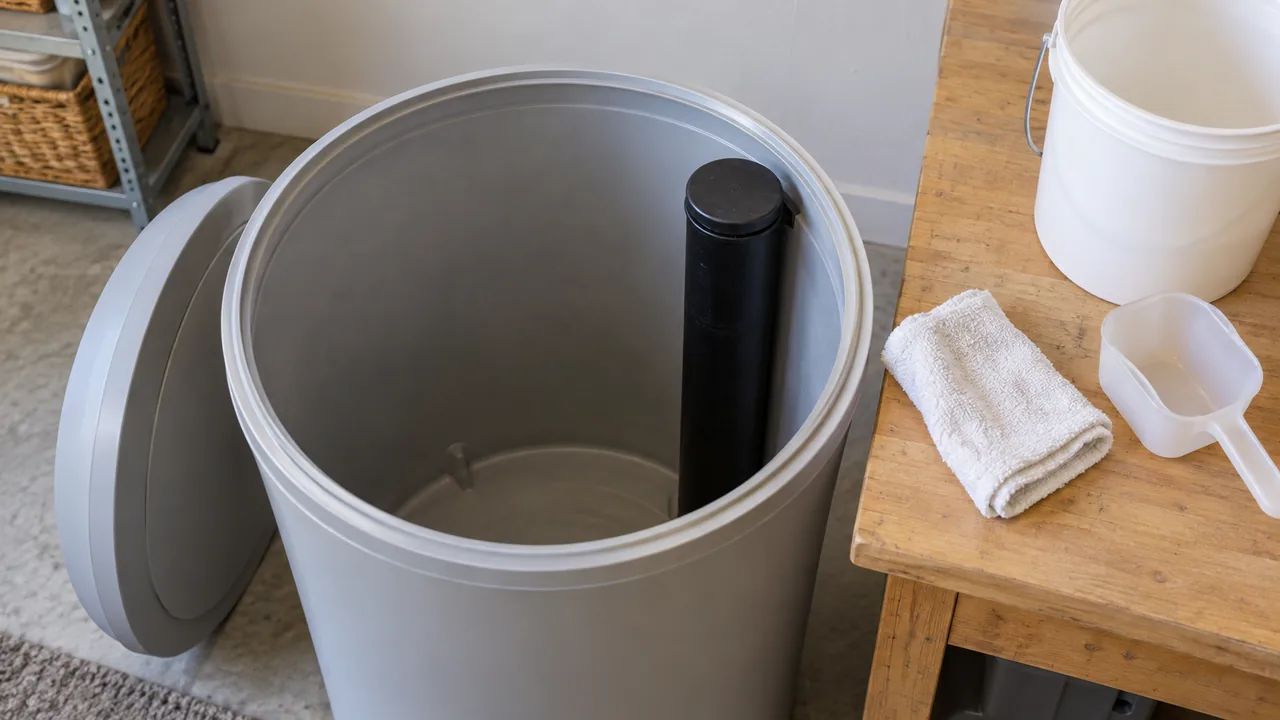
To clean a water softener salt tank, identify the model, follow its instructions for isolating and emptying the salt compartment, remove loose residue, and reinstall the brinewell before the specified refill and return to service. The brinewell is the narrow tube that houses the brine valve and float assembly. Cleaning this area does not replace resin treatment, sanitizing, or valve service. Use the preparation and completion record below to keep those jobs separate.
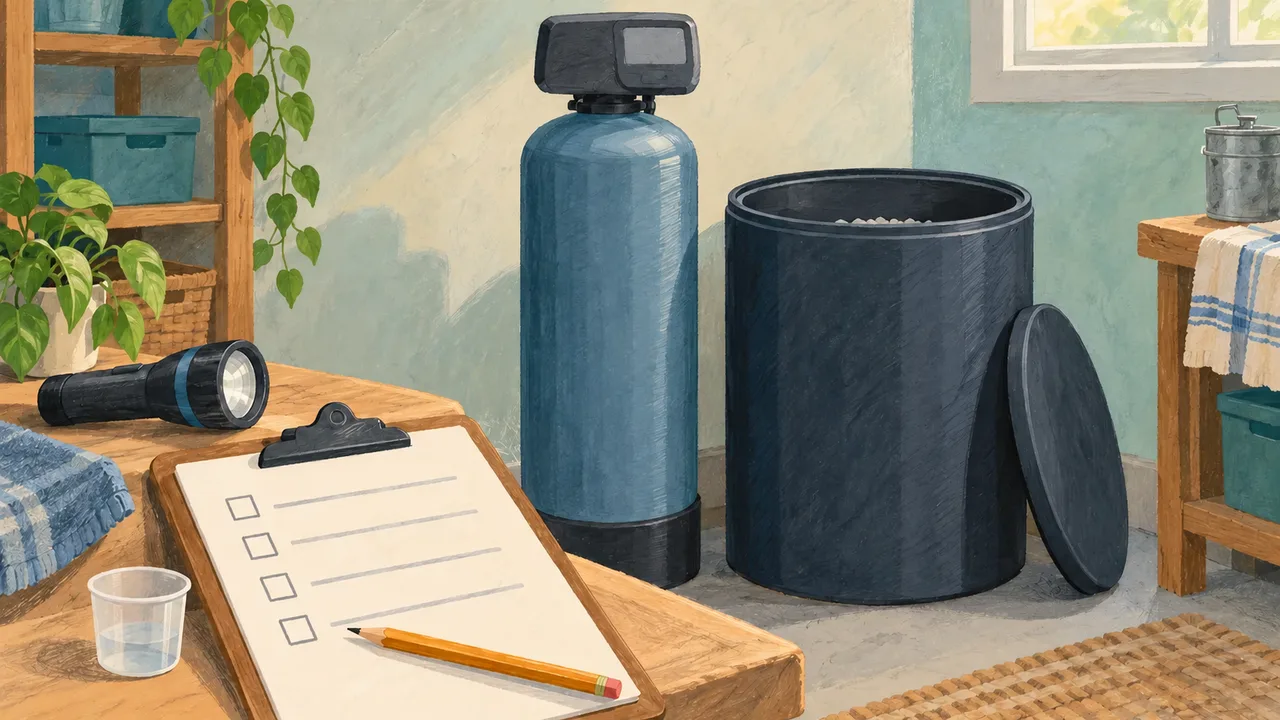
This guide covers household salt-regenerating softeners. The cover image is an AI-generated illustration of cleaning supplies and a salt tank, not a photograph of a tested installation. Equipment shapes and access arrangements vary.
Start with the problem you can observe. Loose dirt in an accessible salt compartment calls for a different procedure than water overflowing, a leaking connection, or an unusual odor. Write down the symptom before disturbing the tank; otherwise, you may lose the information a service provider needs.
| You notice | Next step and limit |
|---|---|
| Loose dirt or salt residue | Find the tank-cleaning procedure. This does not diagnose the resin or valve. |
| Solid salt | Read the salt-bridge guidance before emptying. Do not assume force is needed. |
| Salt in the brinewell | Find the assembly instructions. Removal methods vary. |
| Odor after an idle period | Ask if sanitizing applies. Wiping does not prove water safety. |
| Rising water or a leak | Follow isolation guidance and get support. More cleaning may not fix the cause. |
Do not start by pouring in a general household cleaner. A surface-cleaning method, a resin cleanser, and a sanitizing product have different instructions and purposes. Leave chemical selection and dosing to the current instructions for your equipment.
Record the complete softener model, not just a familiar name on the controller. Keep the relevant manual or support page beside the unit. Photograph the brinewell attachment, hose connection, and current bypass position before changing anything. If you cannot identify how to isolate the equipment or release a fitting, stop at the observation stage and ask the manufacturer or installer.
The Whirlpool salt-tank and brinewell cleaning instructions illustrate why matching matters. Their different equipment styles use either clips or screw-and-wingnut retention, and their hose examples include a threaded nut and a push connection. Select the branch that matches your unit; do not apply the illustrated release motion to a different fitting. The page also identifies clean, dry, individual salt pieces as candidates for reuse, rather than treating everything removed from the tank alike.
Prepare a clean container for reusable salt if your instructions permit reuse, a separate container for discarded residue, a damp cloth, and only the tools the applicable procedure requires. Plan where the removed material will go before starting. Avoid working with a full, heavy tank when a lower salt level would make the authorized procedure manageable.
Use this as a set of checkpoints alongside the manufacturer's procedure, not as replacement disassembly instructions. The exact order of bypassing, releasing a cover, disconnecting a hose, or removing the brinewell must come from that procedure.
For a concrete example, Rheem's salt-tank cleaning page describes wiping with a damp cloth, reseating the brinewell on the tank bottom, and securing its screw and wingnut with the float assembly inside. Its refill instruction specifies 3 gallons of fresh water before salt. That quantity belongs to the equipment and cleaning procedure shown on that page; it is not a universal starting-water quantity for an unfamiliar softener. Salt goes in the main compartment, not down the brinewell.
A clean-looking tank does not tell you whether another treatment is needed. If the concern is odor or long stagnation, Rheem's separate sanitizing procedure shows that sanitizing involves a specified product, a recharge, and a downstream flush. It also gives a special condition for rust-control salt. Those requirements are reasons to read the complete applicable procedure, not to copy a bleach dose into a general salt-tank checklist.
If your manual calls for resin cleanser or internal valve cleaning, record that as another task with its own product and instructions. Do not combine chemicals, improvise concentrations, or open a pressure vessel as part of wiping out the salt compartment. For suspected contamination or an unexplained persistent odor, ask for advice appropriate to the water source; this cleaning record cannot establish drinking-water safety.
Use Print this page to take the checklist to the equipment. Fill in the required restart steps from your manual before beginning, particularly the refill quantity, service position, and whether a recharge or flush is required. An unknown field is a reason to obtain the instruction before proceeding.
| Check | Your notes |
|---|---|
| Model | Brand and full model; valve if different: ______ |
| Reason | Date, what you saw, photo: ______ |
| Procedure | Manual section or saved page: ______ |
| Access | Control positions and parts to remove: ______ |
| Residue | Salt reused or discarded; unusual findings: ______ |
| Assembly | Brinewell, cap, hardware, and hose checks: ______ |
| Restart | Refill amount, service position, required cycle or flush: ______ |
| Result | Leaks, display, dated water level, hardness if relevant: ______ |
| Open item | What still needs an answer, and who to ask: ______ |
Observe the connections you disturbed when service resumes. If a connection leaks or water rises unexpectedly, follow the applicable isolation instructions and seek support instead of topping up again. Interpret the tank water only with its cycle stage and fill sequence recorded; the salt-tank water-level observation guide helps distinguish those conditions before you label the level abnormal.
For a performance concern, record a treated-water hardness result under consistent sampling conditions after the prescribed restart is complete. Carry the cleaning entry into the water softener maintenance log so the next refill, cycle observation, and test can be compared with the same baseline.
Repeated cleaning without a record makes it hard to tell whether the condition is returning or was never resolved. Compare the new observation with the previous photographs, salt product, idle period, and work completed. Ask support which finding would justify a different cleaning method or investigation of another component.
There is no basis here for promising that an annual tank clean prevents every salt or performance problem. Your useful next decision is more specific: keep observing a stable condition, follow a documented maintenance task, or investigate a repeated change. The record lets the manufacturer answer that question without asking you to repeat work blindly.
Use the instructions for your model and the condition you observe rather than assuming a universal annual schedule. Salt-tank cleaning, resin treatment, and sanitizing may have different triggers. Record residue, the salt product, and the reason for each cleaning. If the same condition returns, ask the manufacturer what additional observation or component check would help explain it.
Do not choose a chemical just because it is a familiar household cleaner. The illustrated tank-cleaning procedures use a damp cloth, while sanitizing follows separate product and restart instructions. Check what your specific manual permits for the actual job. Avoid mixing chemicals or borrowing a dose from another system, and get support when odor or possible contamination is the concern.
That depends on the applicable cleaning procedure and how your unit is assembled. Manufacturer examples include brinewells held by clips and others retained with hardware. Identify your arrangement before loosening anything, and keep the float assembly protected. If the fittings do not match the instructions or a component will not release as described, stop and ask for model-specific help.
Use the refill amount specified for your model's cleaning and restart procedure. The Rheem example discussed above calls for three gallons, but that does not establish the correct amount for every softener. Record the amount you actually add and the subsequent cycle stage. If your instructions are missing or unclear, obtain them before guessing a quantity or repeatedly topping up.
Follow the reuse guidance in the matching instructions. The Whirlpool example distinguishes clean, dry, individual pellets or crystals from the rest of the removed material. Keep anything eligible for reuse in a clean container while working, separate from discarded residue. Refill the main salt compartment to the model's specified level, keeping salt out of the brinewell and replacing its cap.
Removing tank residue does not verify resin condition, controller operation, or the entire regeneration process. Confirm that the documented reassembly and restart were completed, then record a hardness result under consistent sampling conditions. Include the current display, service position, and any unusual observations when contacting support. Repeating the cleaning without that information may leave the original cause unexplained.
Maintenance
Check your softener clock, retained programming and interrupted-cycle status after an outage, with model-specific examples and a printable recovery record.
Maintenance
Choose a model-appropriate vacation plan, record power and valve positions, separate freezing-weather preparation, and check the return to service.
Salt & regeneration
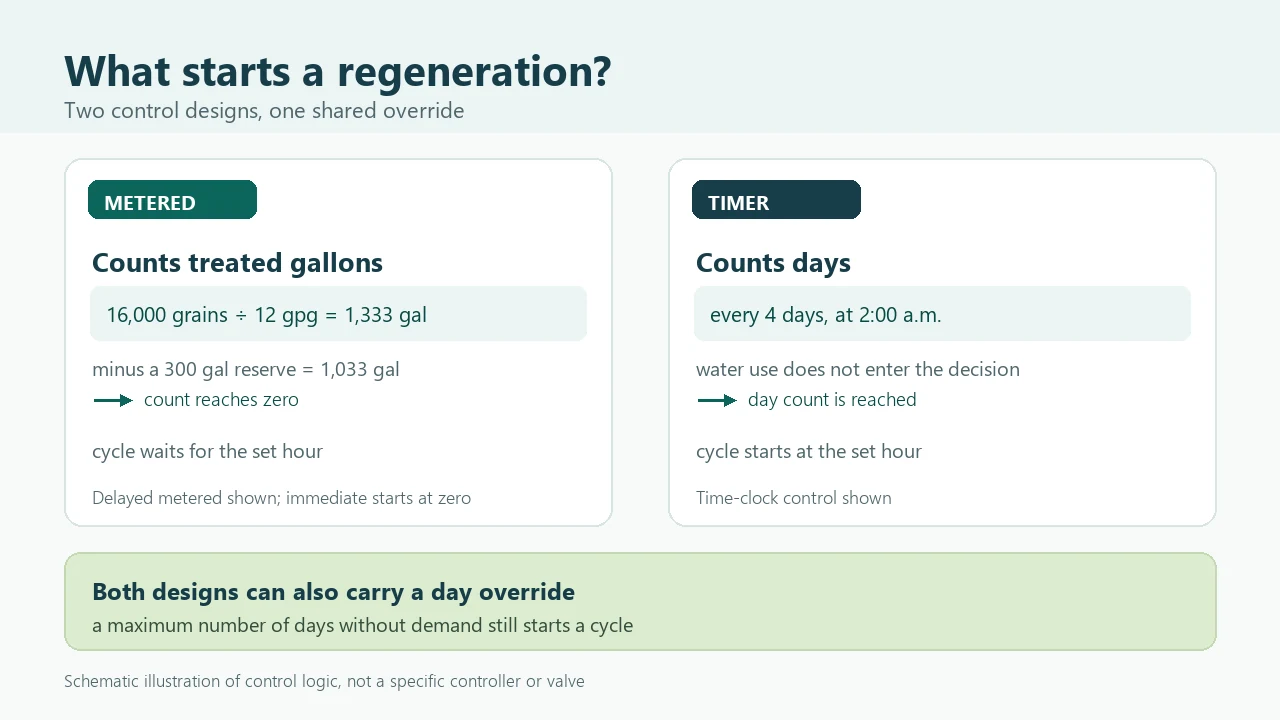
Compare how metered and time-clock softener controls decide when to regenerate, with the immediate and delayed trigger paths, a shared day override, and worked gallons arithmetic for two usage patterns.
Salt & regeneration
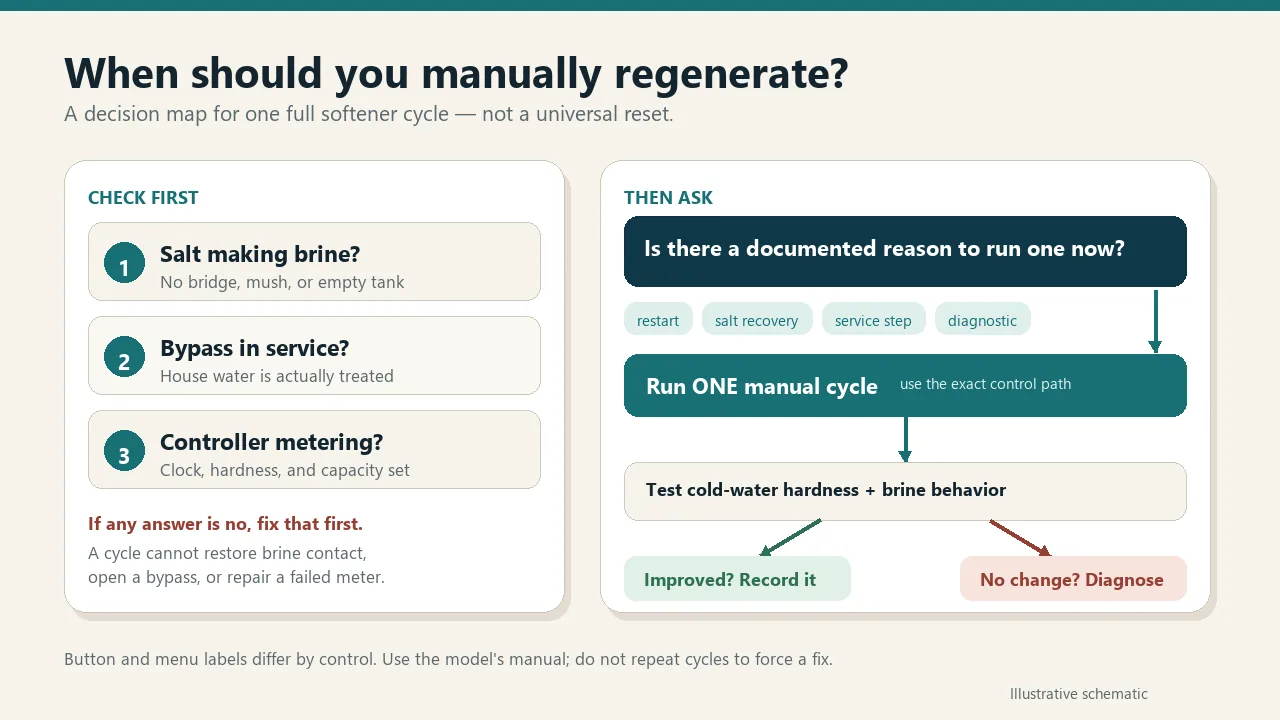
Decide when a manual softener regeneration is justified, compare Whirlpool, EcoWater, and Fleck control paths, and know when to stop and diagnose instead.
Sizing & costs
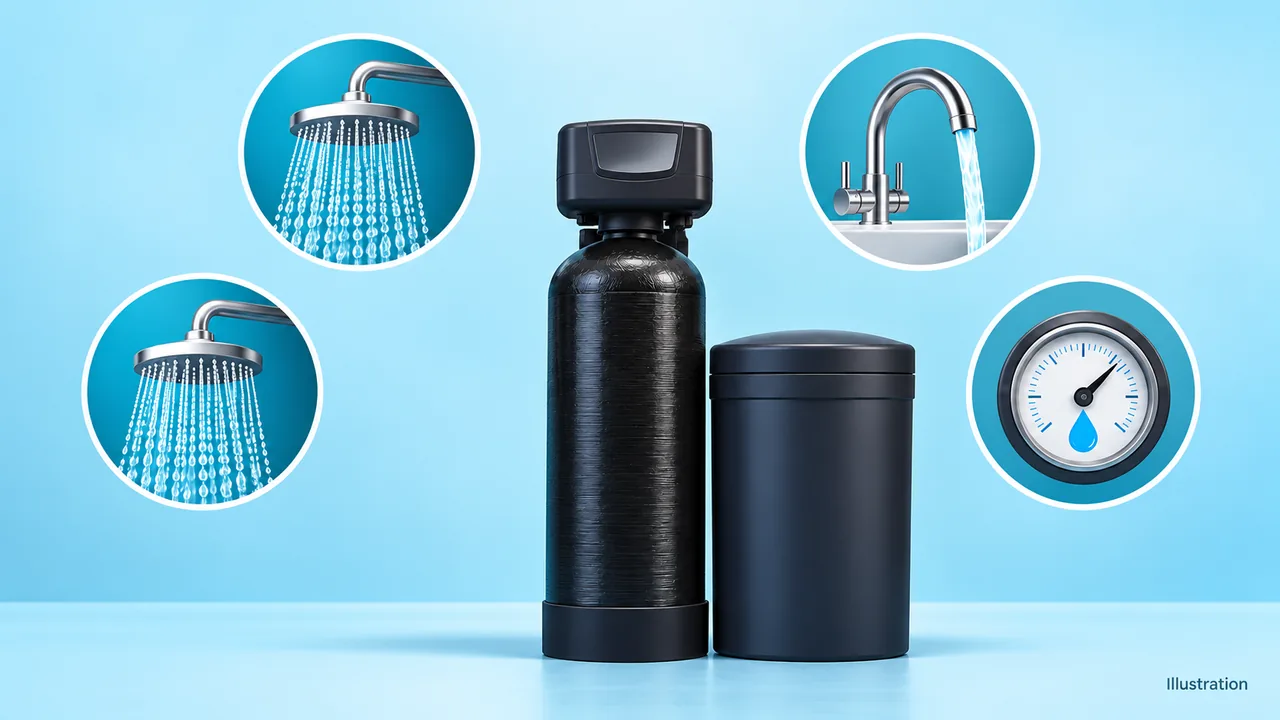
Estimate simultaneous household flow, compare it with a model-specific service-flow rating and pressure drop, and record the evidence before choosing a water softener.
Troubleshooting
Use an observation-first checklist to find why a water softener is not using salt, then separate salt bridges, metering, bypass, fill, and brine-draw questions.