Maintenance
Water Softener After a Power Outage: What Settings Should You Check?
Check your softener clock, retained programming and interrupted-cycle status after an outage, with model-specific examples and a printable recovery record.
Salt & regeneration
See what changes when softener salt runs out, how to recover using your model manual, and how to test treated cold water afterward. Includes a printable record.
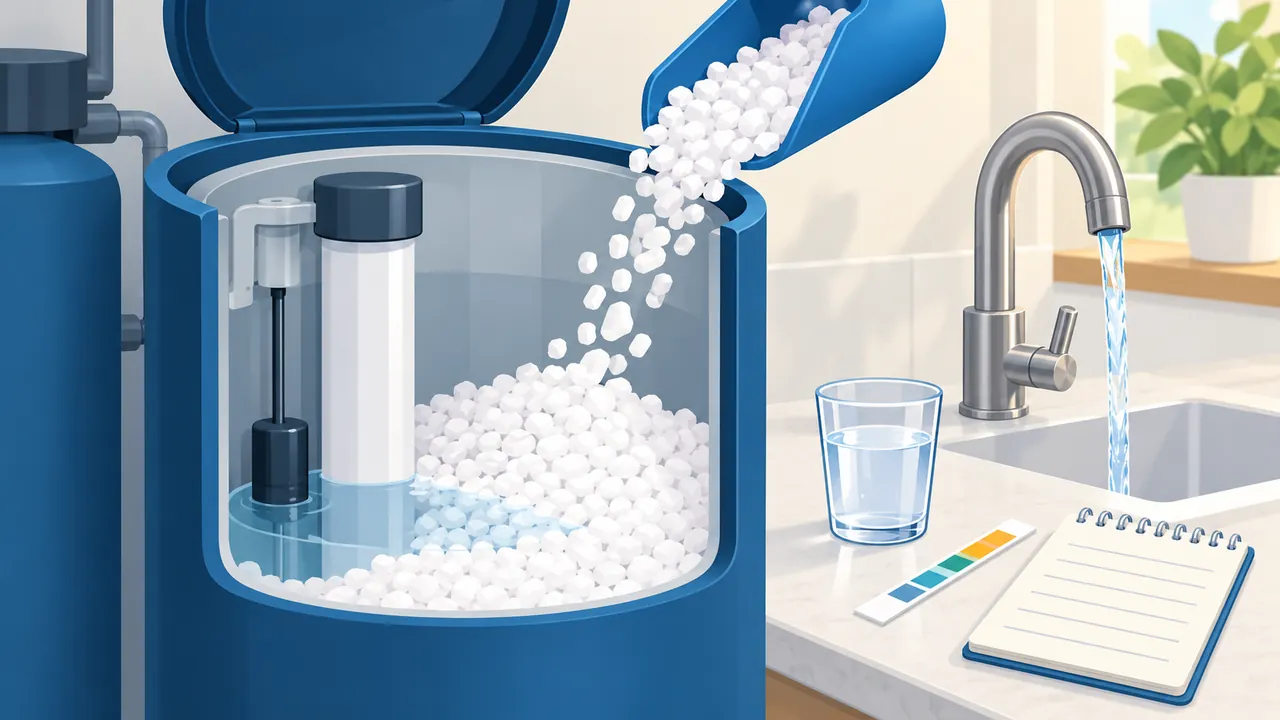
When a salt-based water softener runs out of salt, it may keep supplying water but cannot reliably recharge its resin without brine, the salt water that restores softening capacity. Hard water can return as the remaining capacity is used. Whirlpool's answer for its softeners says running out should not itself damage the unit. To recover, confirm the tank's condition, refill it according to your complete model's instructions, allow an appropriate recharge, and test the water afterward.
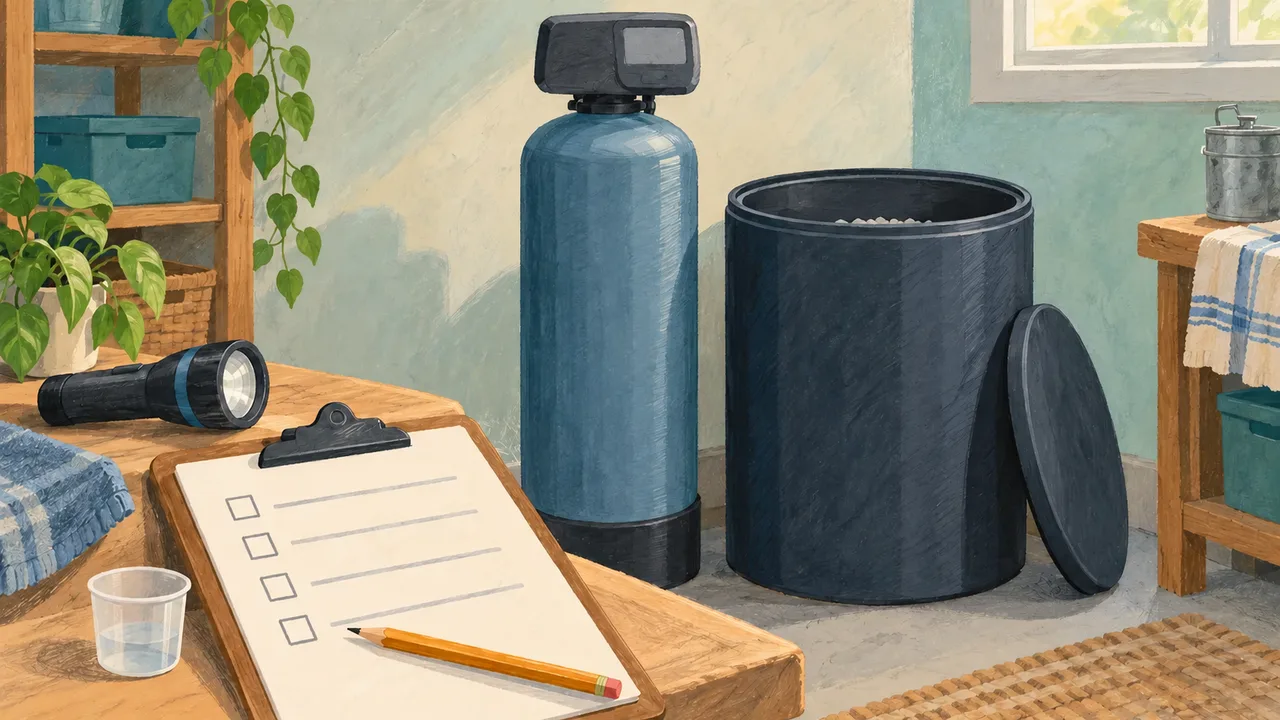
The cover is a conceptual illustration, not a diagram of your model or an installation record.
Find the model label before changing a setting or adding a bag. Look at the salt store and note whether it is truly empty, has loose salt, or has a hard crust over a space below. A tank that looks partly full can still have a salt bridge that keeps salt away from the water used to make brine. If the water level looks unusual, record that too; a water-level problem needs its own model-specific check.
Write down what you see before disturbing the salt. A low-salt light is a prompt to inspect the tank, not a measurement of how much usable salt is in contact with water. If you are unsure whether the material is bridged or whether the tank has abnormal water, use the matching manufacturer's instructions or support path before starting another cycle.
Use the type of water-softener salt and the refill range in the manual for the complete system, including its valve and salt tank. Stop at that range even if a bag is unfinished. Our guide to choosing a refill level and recording the amount added walks through that separate routine task. Do not pour an assumed amount of water, cleaner, or salt into an unfamiliar brinewell to try to speed recovery.
If your controller has a salt-level monitor, check whether its manual asks you to reset the displayed level after adding salt. That setting may control a reminder; changing it does not substitute for regeneration. Note the new physical salt level and the displayed level separately.
Next, use the recharge instructions for your model. For example, the Whirlpool WHEC46 operation manual, page 15 names running out of salt as a reason for an extra recharge, says to add salt before regenerating, and offers an immediate or next-scheduled-time choice. Its fill sequence and controls belong to that model. Another softener may prepare brine at a different point in the cycle, so a universal wait time or button sequence would be misleading. Record when your unit actually finishes, not just when you asked it to start.
After the complete recharge, use a test intended for water hardness at a cold faucet that you know receives softened water. If possible, compare it with an incoming untreated sample and with the reading you took before recovery. Keep the same test method and units in the record. A change in feel, soap lather, or a general dissolved-solids reading is less useful than a hardness comparison for this question.
Cold and hot water can tell different stories. Water already stored in a heater or sitting in a downstream line does not pass back through the newly recharged resin. If treated cold water improves but only hot water still tests hard, record both results before deciding the softener failed. Do not drain or change a water heater on the basis of this test alone; any heater work follows its own instructions.
Use the page's Print this page button, then fill this in during the recovery. A blank field is more honest than an estimated setting or an assumed completed cycle.
| Record | Your observation |
|---|---|
| Complete system model and manual | ______________________________ |
| Date; tank truly empty, loose, bridged, or uncertain | ______________________________ |
| Salt type, manual's refill range, and amount actually added | ______________________________ |
| Physical salt level and displayed monitor level, if present | ______________________________ |
| Recharge requested, stage observed, and completion time | ______________________________ |
| Before: untreated and treated cold hardness, with units | ______________________________ |
| After: untreated and treated cold hardness, with units | ______________________________ |
| Hot-only concern, abnormal tank water, or error display | ______________________________ |
| Next check or manufacturer support question | ______________________________ |
Take a picture of the model label and any error display if you need support. Do not treat the amount of salt purchased as the amount that entered the tank.
If incoming water is clearly hard and confirmed treated cold taps still test near that untreated sample after a documented recharge, check the observations before repeating the cycle. Was the salt loose and at the instructed level? Did the cycle finish? Is the unit in service rather than bypass? A visible salt surface alone cannot answer whether brine formed and moved through the system.
The Rheem no-soft-water support path separates salt use, bridging, tank filling, bypass, and testing after recharge for its equipment. Use those as categories to describe the fault, not as buttons or valve positions to copy onto another brand. If a cycle stalls, the tank water behaves abnormally, or all treated cold outlets remain hard, take your record to the complete-system manufacturer or service provider. Our post-regeneration hardness diagnosis helps you distinguish all-cold, hot-only, and hardness-that-returns patterns with a sample log.
An improved treated-cold reading, compared with clearly hard incoming water, shows the unit is softening at that moment; it does not show how long its capacity will last before the next recharge. Keep the refill date, salt level, hardness readings, and next actual cycle together. If hardness returns unusually soon or the physical salt level does not change over successive checks, those observations are more useful to a technician than an automatic second regeneration. Your model's manual and the measured result determine whether another cycle, a setting check, or service is the sensible next step.
Whirlpool says running out should not itself damage its softener, although the unit needs salt to work properly. That statement is specific to Whirlpool's supported equipment, so use your own complete-system manual if you have a different model or an existing fault. The immediate concern is loss of softening after the resin's remaining capacity is used. Refill to the instructed range, complete the appropriate recharge, and test treated cold water before deciding that a component failed.
Salt in the storage tank is a supply for making brine; it is not an instant treatment for water already passing through the house. Your unit still needs to complete a recharge that uses suitable brine. Some controllers will run that cycle on their normal schedule, while a model's manual may describe an extra recharge after a salt outage. Record the scheduled or manual choice, confirm the cycle finished, and test a known treated cold faucet rather than assuming the refill alone fixed it.
There is no useful time that fits every softener. The controller's fill and brine-making sequence, its recharge schedule, and whether a cycle was already underway all matter. The Whirlpool WHEC46 manual offers immediate and next-scheduled recharge choices for that model; its timing should not be transferred to another control. Use your manual to decide when the recharge can properly occur, wait for it to finish, and compare hardness at a confirmed treated cold tap. Hot water can lag because it may have been stored earlier.
Do not add a guessed volume just because the salt store ran empty. Some systems fill the brine tank during a particular stage; water visible at another point in the cycle can mean something different. Find the full model and follow its startup or recovery instructions, especially if the tank is unusually dry or water sits above the salt. Record the condition before changing it. If the manufacturer's guidance calls for a specific fill procedure, use that procedure rather than one copied from another valve or tank.
The softener treats water that passes through it after recovery. A water heater may still contain water supplied while the salt tank was empty, and a hot-only hardness result therefore does not prove the recharge failed. Test a known treated cold faucet and an untreated source with the same hardness method, then note the hot-water result separately. If the cold results are also hard, follow the broader softener diagnosis. If only hot water differs, use the heater's own instructions for any further work.
Do not make a second cycle automatic. First confirm the refill matched the manual, the initial cycle finished, and treated cold water was tested against untreated water. If the result is still hard, check whether salt was actually available for brine, whether the unit filled and drew brine as expected, and whether it is in service. Your model's instructions or support team can then say whether another recharge is appropriate. Repeating cycles without these observations can hide the real fault and use salt and water.
Maintenance
Check your softener clock, retained programming and interrupted-cycle status after an outage, with model-specific examples and a printable recovery record.
Maintenance
Choose a model-appropriate vacation plan, record power and valve positions, separate freezing-weather preparation, and check the return to service.
Salt & regeneration
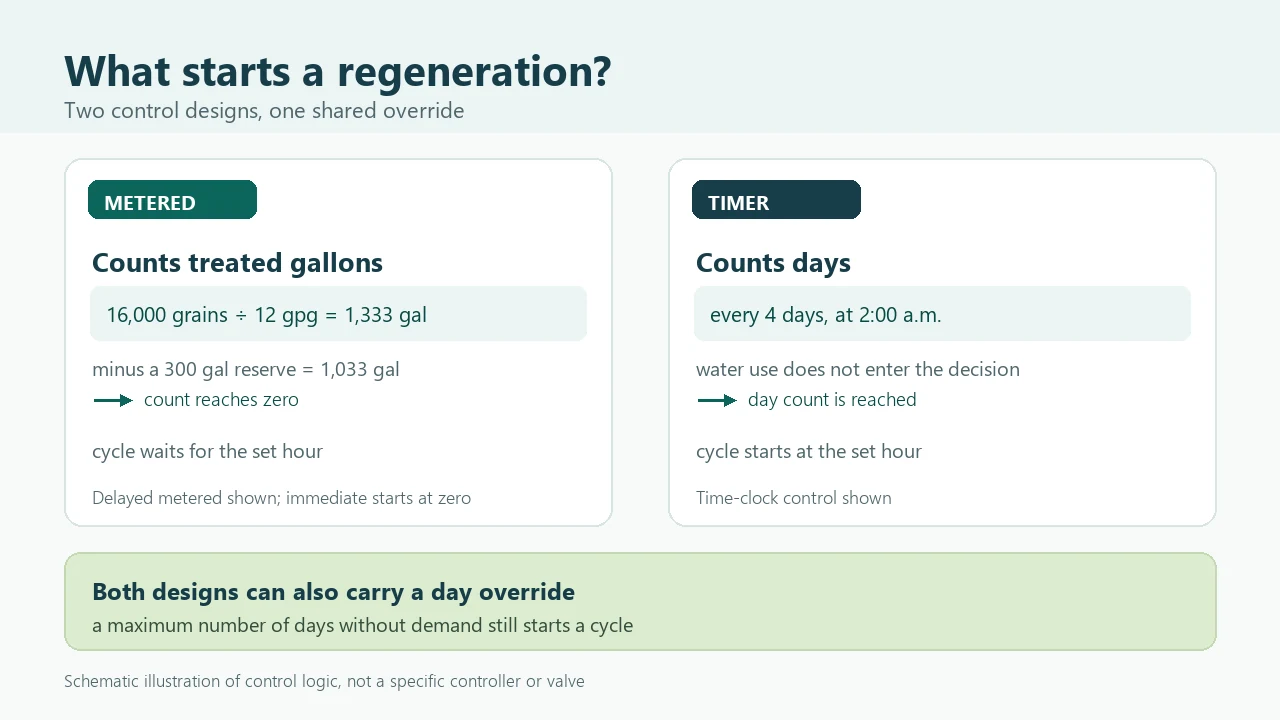
Compare how metered and time-clock softener controls decide when to regenerate, with the immediate and delayed trigger paths, a shared day override, and worked gallons arithmetic for two usage patterns.
Salt & regeneration
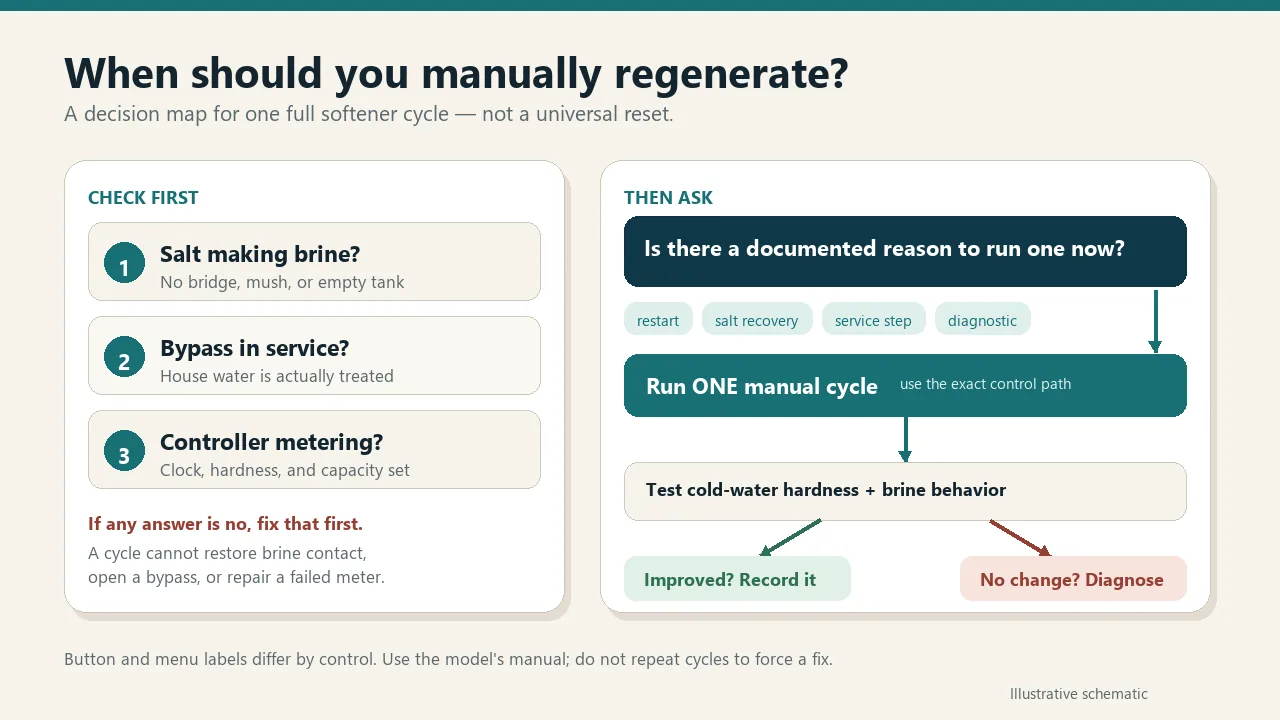
Decide when a manual softener regeneration is justified, compare Whirlpool, EcoWater, and Fleck control paths, and know when to stop and diagnose instead.
Sizing & costs
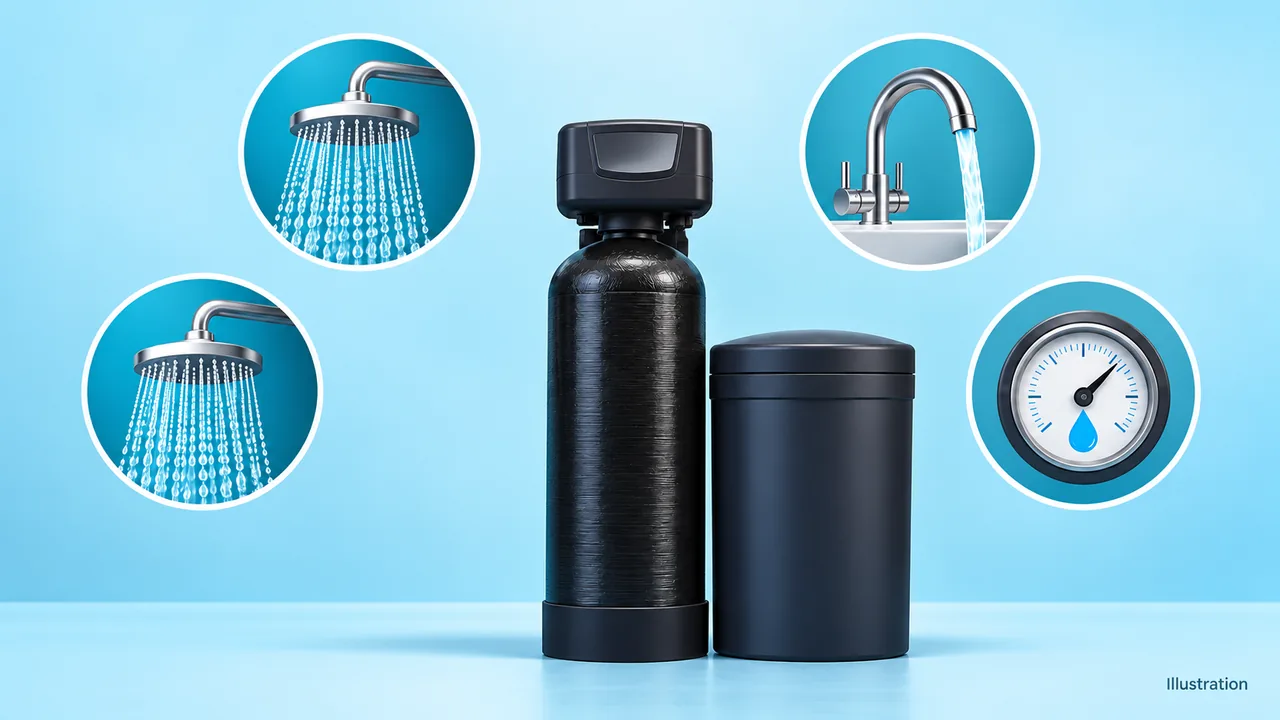
Estimate simultaneous household flow, compare it with a model-specific service-flow rating and pressure drop, and record the evidence before choosing a water softener.
Troubleshooting
Use an observation-first checklist to find why a water softener is not using salt, then separate salt bridges, metering, bypass, fill, and brine-draw questions.